

If you’ve ever been curious about life drawing but felt unsure about what it actually involves, you’re not alone. It’s one of the most common questions we hear — and one of the biggest reasons people hesitate before booking their first session.
So let’s clear it all up. Here’s everything you need to know about life drawing, from what happens in a typical session to why people of all ages and abilities find it so rewarding.
What Is Life Drawing?
Life drawing is the practice of drawing the human figure from a real, live model. It’s one of the oldest and most fundamental forms of art practice, stretching back centuries through art schools, studios, and academies around the world.
The model holds a series of poses — some short, some longer — while artists draw, sketch, or paint what they see. It’s as simple as that. There’s no trick to it, no hidden catch. You look, you observe, and you draw.
What makes life drawing different from drawing a photograph or copying from a screen is that you’re working from a three-dimensional, living person. The light changes. The form has depth. Small details — the way a shoulder catches the light, the tension in a hand — become things you notice and try to capture. It trains your eye in a way that nothing else quite does.
What Happens in a Life Drawing Session?
Every group runs things slightly differently, but most sessions follow a similar pattern. At our West London classes, a typical evening looks like this:
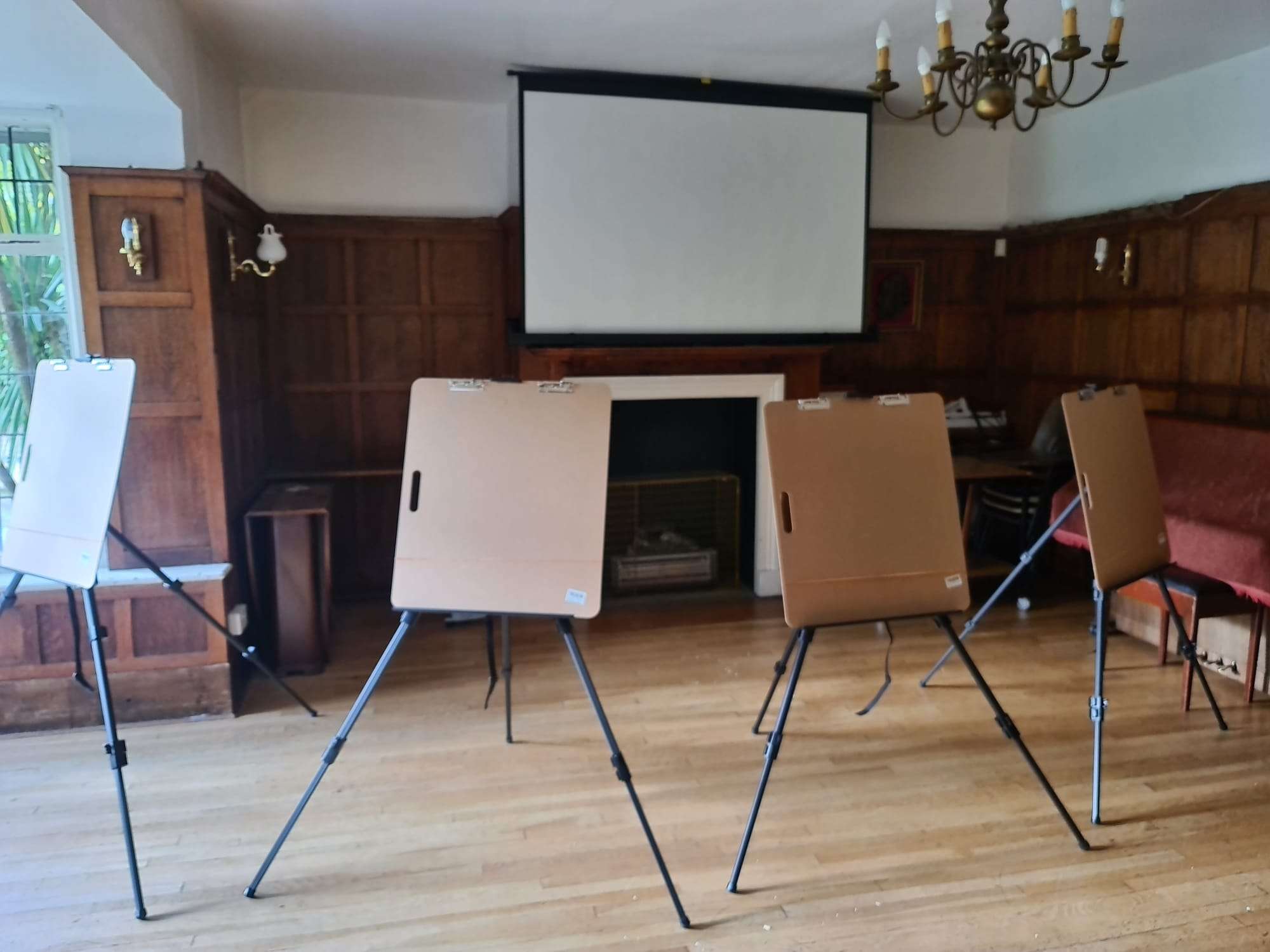
You arrive and settle in. We set up standing easels with paper, and lay out a range of drawing materials — charcoal, pencils, pastels, chalk, and putty erasers. You don’t need to bring anything; it’s all provided. Just pick a spot, choose your materials, and get comfortable.
The model takes their first pose. Sessions usually begin with a series of short poses — sometimes as brief as two or three minutes each. These warm-up poses are about loosening up, getting your hand moving, and capturing the overall gesture of the figure without overthinking it.
Poses get gradually longer. As the session progresses, the poses extend — ten minutes, fifteen, twenty, and sometimes up to thirty minutes for a longer study. This is where you can start to work on detail, shading, and proportion.
There’s usually a break. Halfway through the evening, there’s a short break. It’s a chance to stretch, have a chat with other artists, and look at what everyone else has been working on. It’s one of the most sociable parts of the evening.
You finish up. At the end of the session, you can take your drawings home, photograph them, or leave them — it’s entirely up to you.
Do I Need to Be Good at Drawing?
No. This is probably the biggest misconception about life drawing, and it stops a lot of people from ever giving it a go.
Life drawing is not a test. Nobody is marking your work or comparing it to anyone else’s. People attend with wildly different levels of experience — from complete beginners who haven’t picked up a pencil since school, to practising artists who come every week. Everyone is welcome, and everyone is focused on their own work.
The purpose of life drawing is practice. It’s about training your eye to see and your hand to respond. Every drawing you do — even the ones you’re not happy with — is building skills you didn’t have before. There’s no such thing as a wasted session.
If anything, beginners often have an advantage. Without ingrained habits, you tend to draw more freely and with less self-criticism. Some of the most expressive, interesting drawings come from people who are just starting out.
What Should I Wear? What Should I Bring?
Wear whatever you’re comfortable in. Some people use charcoal, which can get a bit dusty on your hands and clothes, so you might want to avoid your best white shirt — but honestly, it washes out easily and it’s never as messy as people expect.
As for what to bring: just yourself. At our sessions, we provide all the drawing materials — standing easels, paper, charcoal, pencils, pastels, chalk, and putty erasers. If you have your own favourite sketchbook or materials you prefer to use, you’re welcome to bring them along, but there’s no need to buy anything before your first session.
Is Life Drawing Just Nude Drawing?
Life drawing traditionally involves drawing from an unclothed model, and that is what most sessions — including ours — involve. The model is a professional, and the setting is respectful and focused on art.
If the idea of being in a room with a nude model feels awkward, that’s completely natural. Almost everyone feels that way before their first session. What we hear again and again is that any self-consciousness disappears within the first few minutes. Once you start drawing, your brain shifts into observation mode — you stop seeing a naked person and start seeing shapes, lines, light, and shadow. It genuinely happens faster than you’d expect.
Our groups maintain a clear code of conduct to ensure everyone — both artists and models — feels safe, respected, and comfortable at all times.
Who Goes to Life Drawing?
All sorts of people. Our regular attendees include retired hobbyists, university students, professional illustrators, people who just fancy a creative evening out, parents whose kids have left home and want to try something new, and people who haven’t drawn since they were teenagers and decided to pick it up again.
The common thread isn’t talent or experience — it’s curiosity. If you’re curious enough to be reading this, you’re exactly the right kind of person for life drawing.
Why Do People Love It?
There are plenty of practical reasons to try life drawing — it improves your observational skills, teaches you about proportion and anatomy, and develops hand-eye coordination. But when we ask our regulars why they keep coming back, the answers tend to be more personal than that.
People talk about how it’s the one evening in the week where their phone is away and they’re completely focused on something in front of them. They talk about the meditative quality of drawing — the way two hours can pass without you noticing. They talk about the satisfaction of seeing a drawing take shape under your hand, even when it’s imperfect.
Life drawing is a rare kind of activity. It’s creative, it’s social, it’s calming, and it gives you something tangible at the end. In a world of screens and notifications, spending an evening with a pencil in your hand drawing a real person in a real room feels like a genuine reset.
Ready to Give It a Try?
We run weekly life drawing groups in West Drayton at the beautiful Southlands Arts Centre — every Thursday from 7pm to 9pm, £20 per person, all materials included.
No experience needed. No booking stress. Just come along, pick up a pencil, and see what happens.
If you’ve got any questions at all, you can reach us through our contact page — we’re always happy to chat.

